This month, we’re doing something a little bit different for our 12 for 12. If you somehow missed the tremendous news, the DEC announced this month that it had completed its acquisition of the Shoreham Forest, preserving in perpetuity roughly 750 acres of upland forest, wetlands, and shoreline. This is the most tremendous piece of environmental news on Long Island since the forest was added to the Pine Barrens Core Preservation Area back in 2019, and we at the Society couldn’t be more thrilled that this long-anticipated acquisition, which we’ve long advocated for, is finally a reality. Now, while the property is technically accessible to the public, it is not what we’d consider a public park. The DEC has stated that their intent is to improve public access with a trail network throughout the preserve, and it’s that which this 12 for 12 is focusing on. Because after the obvious benefits to our aquifer system, our sensitive wetlands, and our Island’s ecology, it’s important to consider the recreational, health, and even cultural benefits of this parcel.
First and foremost, we need to talk about the ecological side of the Shoreham Forest. In their announcement video, the DEC rightly highlighted critical nesting habitat for species like the Piping Plover and Least Tern, but the swath of species which make the area home is even vaster than that. North Shore upland forests such as this are frequently home to Bald Eagles, and sites where upland forest transition to wetland are frequented by migratory species, such as the Common Yellowthroat. Beyond birds, the forest is host to a vernal pool which is absolutely critical for species of frogs, salamanders, and other amphibians, which use the pools as crucial breeding ground. Society co-founder John Turner showcased this pool during our 2024 Gala. A properly designed trail will allow for observation of this pool, while maintaining a respectful distance, and would be a treat for any naturalist.
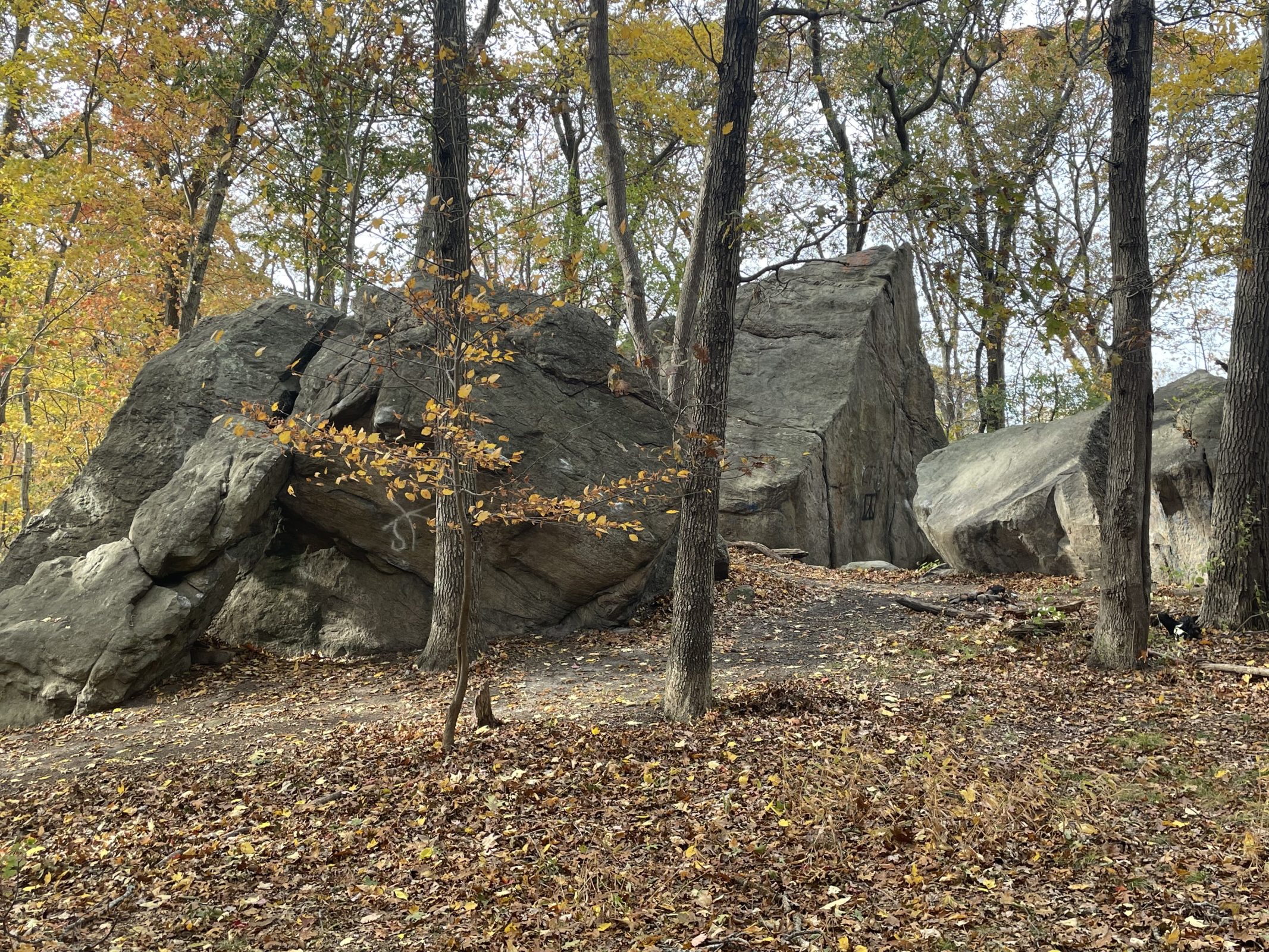
Besides the ecological benefits, it’s crucial to recognize the cultural significance of this land. Split Rock is a formation dating back hundreds of millions of years, which is notable at a glance for the fact that it was once a singular glacial erratic that split into pieces, hence the name. Besides its visual appeal, however, there is the fact that it is a significant site for the people of the Unkechaug Nation. It was a site where they performed their ceremonies, and thus it carries with it an element of the sacred. Preserving this land is thus not only practical, but morally correct. When the network of trails is designed, there needs to be careful consideration for this site so that it can be easily appreciated and respected, by members of the Unkechaug Nation and their fellow Long Islanders. For more on the cultural significance of Split Rock, you can read this piece from RiverheadLocal (https://riverheadlocal.com/2026/10/20/sacred-indigenous-site-at-heart-of-preserved-shoreham-forest/).
The preservation of the Shoreham Forest represents the biggest environmental win for Long Islanders in years. Whether you’re looking for a place to exercise with a lengthy hike, are an avid naturalist eager to explore some pristine Pine Barrens habitat, or are keen to learn more about the crucial pre-colonial history of Long Island, the Shoreham Forest can provide. We at the Society are so grateful that this land will now be “forever wild,” a measure championed by the late, great Richard Amper throughout the ten years before his passing. It will stand firm as a core piece of his legacy, and a testament to the character of Long Island, which in turn will give back to Long Islanders, for generations to come.
By Travis Cutter, Long Island Pine Barrens Society
Photo Credit: John Turner