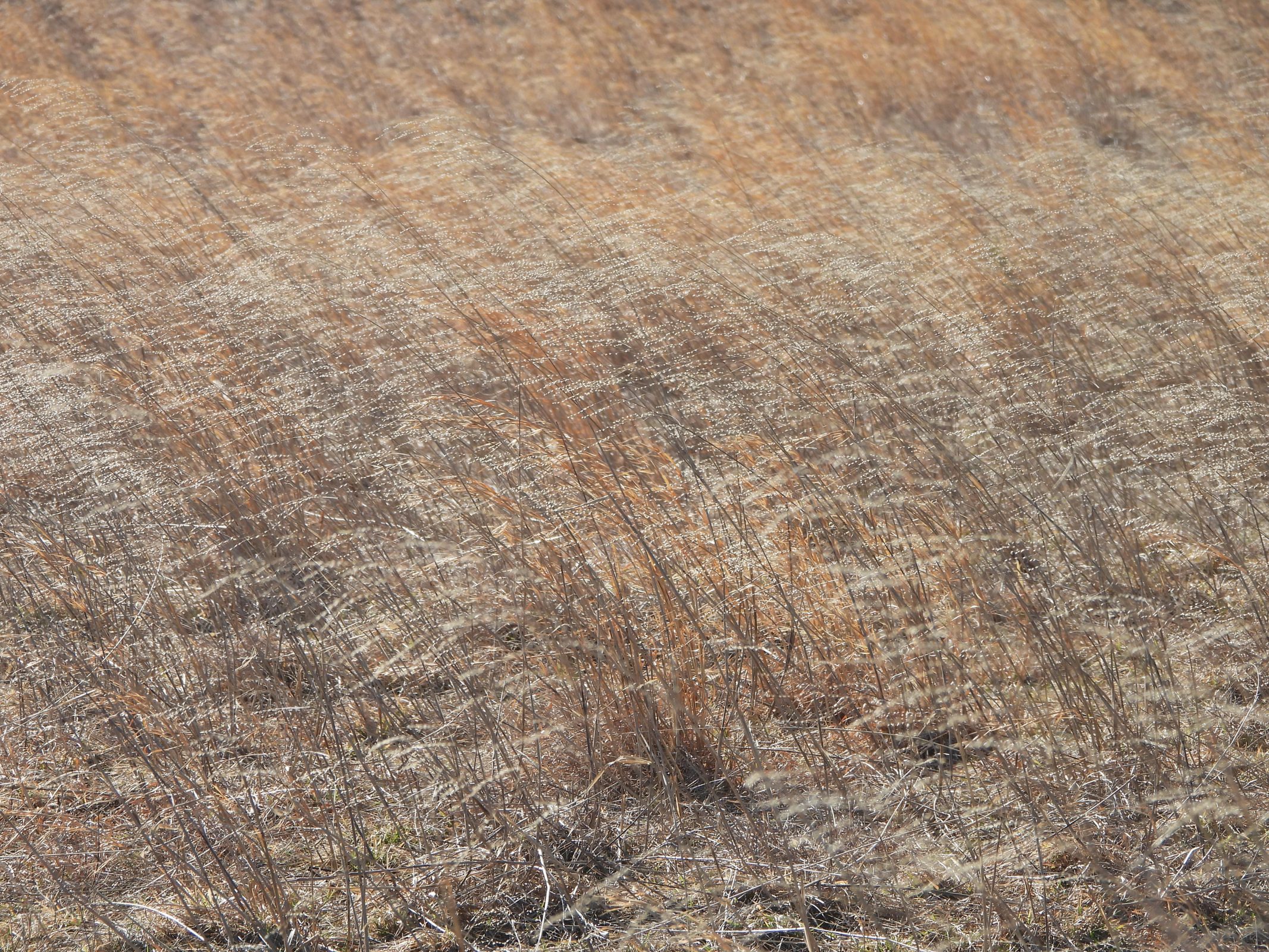
Of all the parcels included in our “The Best of the Rest” campaign, few are more unique, or more contested, than the vast EPCAL grasslands. Formerly a testing site for Naval aircraft, under the auspices of the Grumman Corporation, now it sits untended as a sweeping grassland habitat. Though it’s in the midst of the early stages of succession, with cedars dotting the landscape, there are few areas on Long Island that are quite so open, quite so huge in scope. Places like EPCAL could make a person feel small, thanks to their enormity, but EPCAL also shows how large we really are. The land is subject to our whims, our designs. Not so long ago, it was subject to ample development, and that could come to pass once again. So, we must appreciate it now that we have it.
The most important thing to emphasize about EPCAL is that it’s cold, far colder than the average temperature elsewhere on Long Island. Thanks to the flat runways and flat grasslands, the winds rush through uninhibited. When I visited, walking even a short distance was a constant battle against the gales. It provides an excellent leg workout, as in the most open parts of the runway, the wind is enough to knock you down if you’re not careful. Keeping your balance requires its own sort of muscular exertion, and so, though the terrain is flat and paved, a walk at EPCAL can prove as difficult as a hike through a place as tricky as Wading River Marsh Preserve. The flatness, the openness, and the paved runways make EPCAL incredibly easy to navigate, however, and reduce the fear of ticks, even in warmer weather. The runways are so large that you can easily keep several feet away from the grasses themselves, without sacrificing your view of them.
A big hope with this return visit to EPCAL was to spot some of the many species of wildlife that make Long Island’s grasslands their home. Birds such as the Short-eared Owl and Eastern Meadowlark are uniquely found in grassland habitats. Unfortunately, whether due to the time of day, or simply because of bad luck, I didn’t find any of the owls I so greatly desired to see. On a global scale, Short-eared Owls are not endangered, but within the state of New York their population is sadly on the decline. That’s just one of the reasons why preserving grasslands like EPCAL is so essential.
Yes, unfortunately, EPCAL is not preserved land. Though it is publicly owned and publicly accessible, it has yet to be set aside for preservation. And that’s an immense shame. Besides the aforementioned ecological benefits of conservation, preserving EPCAL would prove immensely beneficial for the aquifer. Such vast tracts of Pine Barrens land provide ample space to recharge the underlying aquifer, and so preserving EPCAL helps guarantee clean, cheap water for the region.
Sadly, EPCAL continues to be under threat. Developers continue to have their eyes on the property. So, the question still looms: what is to be done with EPCAL? Our stance, of course, is that as much of it should be preserved as possible. But with such a major, hotly contested parcel, we need help to convince the powers that be of this course forward. If you’re a constituent of the Town of Riverhead, it would go a long way if you kindly informed your town councilmember, as well as the supervisor, that you support preservation. We also recommend you visit the site yourself and enjoy it as it is. If more people are using it for the purpose of recreation – whether in the form of exercise, birding, or biking – it would demonstrate the value of the site for that purpose to the Town. EPCAL stands as one of the most unique, most delightful, most enriching Pine Barrens locales across Long Island, and if we achieve nothing else with this review, we’d like to see more people enjoy it.
By Travis Cutter, Long Island Pine Barrens Society