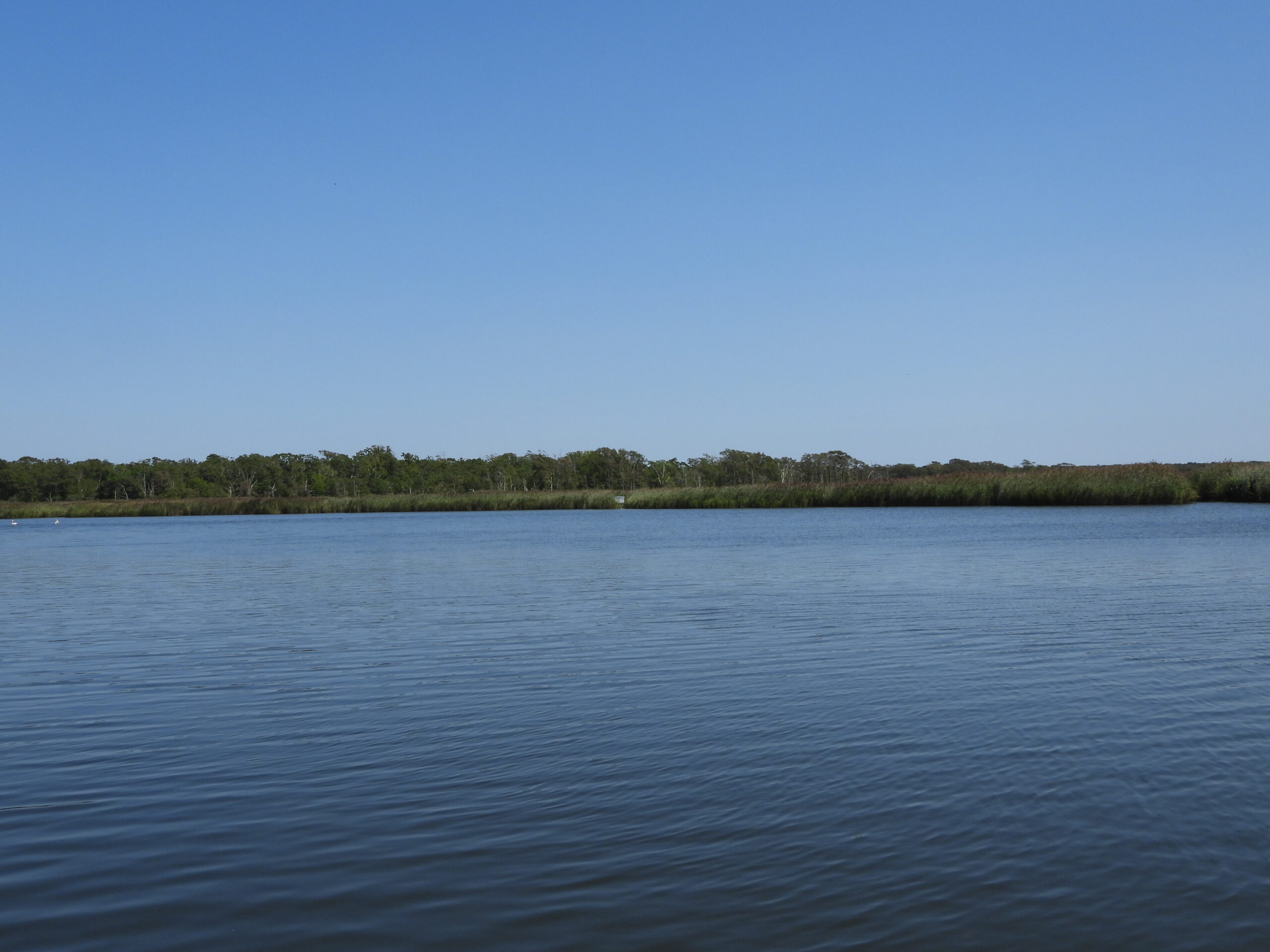
August is National Water Quality Month, and each year we like to take advantage of that fact to broadcast on our social media lots of facts about water, and how our work preserving the Pine Barrens helps to maintain Long Island’s water quality. If you’ve never taken much time to think about water quality, it’s an issue you may not have noticed in your day-to-day life. After all, if the water coming out of your tap is clear and odorless, then what’s the issue? Similarly, the water when you go to the beach is always some shade of blue, so what’s the harm in taking a swim? When it comes to water quality, so much of the challenge is in showing how severe the problems are, since those problems are often in the realm of the microscopic. So, consider this blog post a primer on why water quality is such an important issue here on Long Island.
Drinking Water
Making sure the quality of Long Island’s drinking water is high is the most important aspect of this critical issue. For if drinking water quality is low, then that means Long Islanders will be consuming dangerous contaminants, which could make them sick in the short term, or contribute to health problems in the long term. There is also the issue of quantity, due to the source from which Long Island (both Suffolk and Nassau counties) gets its water. Beneath the ground are vast underwater “pools” which make up the aquifer system. This water is pumped up from underground, treated to remove what contaminants may be present, and then distributed to Long Island homes via utility companies like the Suffolk County Water Authority. You’ll notice from that brief description that there is no distinction made between drinking water and water destined for your shower, your toilet, or your garden hose. All of the water you use at home comes from the same source. Considering that the population of Long Island numbers in the millions, you can understand why during hot summers – such as the one we’re currently in the middle of – local governments advise their citizens to hold back on less necessary uses of water, such as watering your lawns.
But how does preserving and protecting the Pine Barrens help maintain the aquifer system? Well, it’s called the Pine Barrens because of its porous, rocky soil. This acts as a great natural filter, and is what allows the aquifer system to exist. Rainwater seeps into the ground, and as it passes through the “barren” soil, many contaminants are removed. Thus, when the water settles in the aquifer system, it is purer than when it rained down, and requires much less purification than it might otherwise need. With a less intensive purification process, the cost for Long Islanders decreases. So, preserving the Pine Barrens creates a larger area where water can seep into the aquifer system without being exposed to contaminants. Water with an increased concentration of contaminants obviously can’t get to as pure a state as water with fewer contaminants. So, preserving the Pine Barrens allows the aquifer to recharge without introducing too many new contaminants to it.
Watersheds
Suffolk County’s two major watersheds are the Carmans and Peconic Rivers which, along with various minor rivers and streams, feed out into the bays and the Long Island Sound which surround our Island. While these bodies of water are not suppliers of drinking water, Long Islanders do rely on them, whether it be for recreation, or for our local fishing industry. Maintaining the quality of this water is thus crucial in maintaining both the local economy and Long Islanders’ health. The greatest threat posed to these bodies of water is eutrophication, a process wherein the water becomes saturated with nutrients, such as nitrogen. Eutrophication can easily trigger Harmful Algal Blooms (HAB), wherein normally invisible algae grow at an exponential rate, turning the water brown, green, or red, depending on the species. These HABs make the water toxic to ingest, meaning they put a halt to any fun days at the beach. They also can deprive the water of oxygen used by fish, resulting in massive die-offs. And since shellfish consume algae, they become infected with whatever toxins those algae produce. Contaminated shellfish can thus cause in humans a number of dangerous conditions, such as diarrhetic or paralytic shellfish poisoning.
By preserving land around these watersheds, we can create a nice buffer zone, preventing contaminants (such as nitrogenous fertilizers) from entering into the rivers and bays. Thus, preserving Pine Barrens land protects the animals which inhabit the land, and the aquatic ecosystems bordering the land. And by protecting the water, preserving the Pine Barrens safeguards the local economy and public health.
Conclusion
In this blog, we’ve gone over just a few of the ways in which preserving the Pine Barrens helps preserve Long Island’s water quality, and the reasons why we care about preserving water quality in the first place. If you want further information about Long Island’s water quality, and the work we do to protect it, please explore the rest of our website and head over to our social media pages.
By Travis Cutter, Long Island Pine Barrens Society